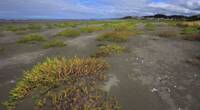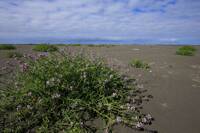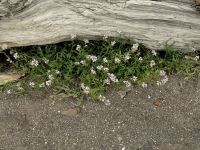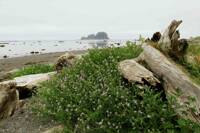
Distribution: Occurring west of the Cascades crest in coastal counties in Washington; British Columbia to California along the coast, also along the Chesapeake Bay on the Atlantic Coast.
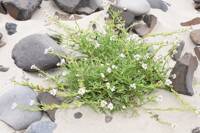
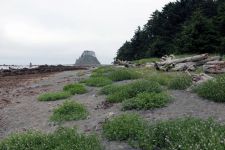
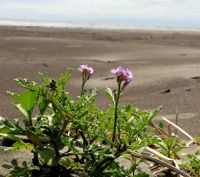
Habitat: Along marine water shorelines in sand or gravel.
Flowers: May-October
Origin: Introduced from Europe
Growth Duration: Annual, Perennial
Conservation Status: Not of concern
Pollination: Bees, flies, butterflies
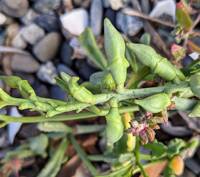
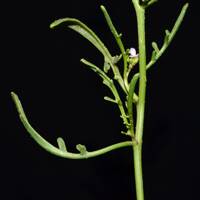
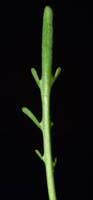
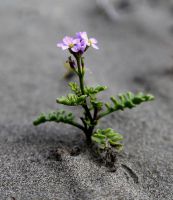
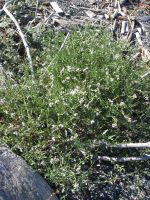
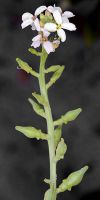
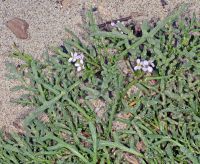
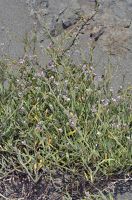
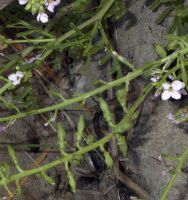
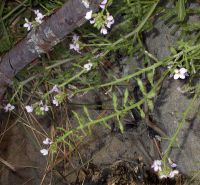
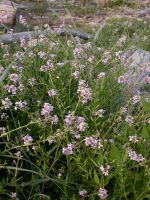
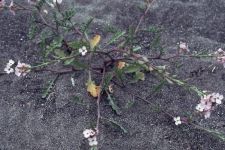
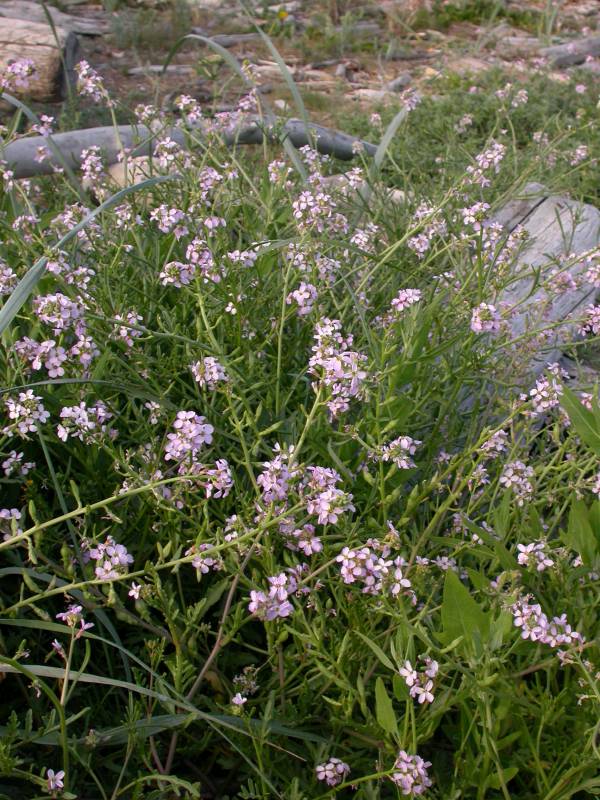
Glabrous, fleshy annual, the stems freely-branched, decumbent at the base, 1-5 dm tall.
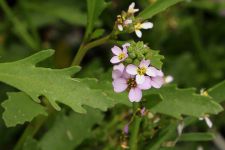
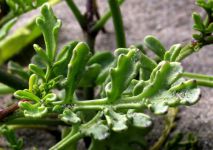
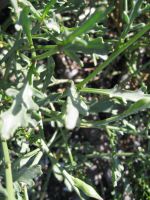
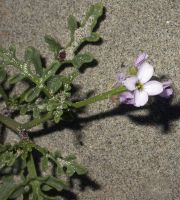
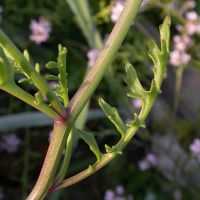
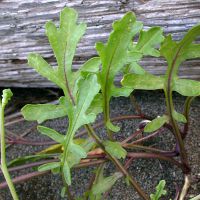
Leaves alternate, 4-8 cm long, pinnatifid, the blade oblong-ovate to oblong-oblanceolate, narrowed to a broad petiole.
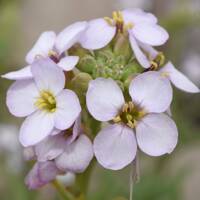
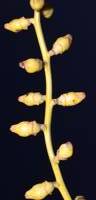
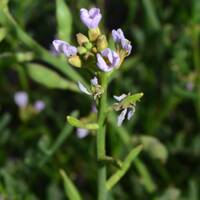
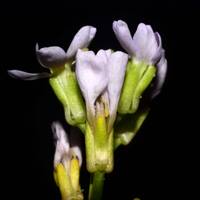
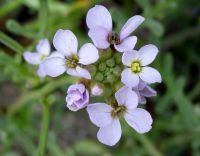
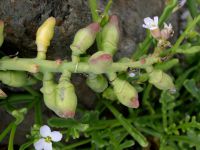
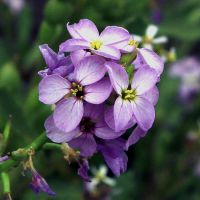
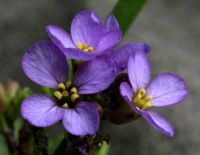
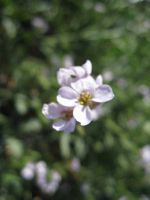
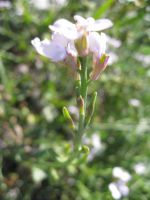
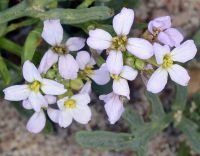
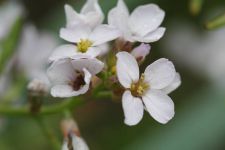
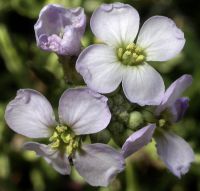
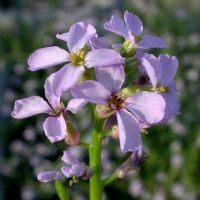
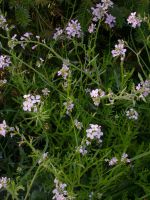
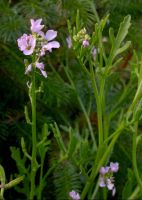
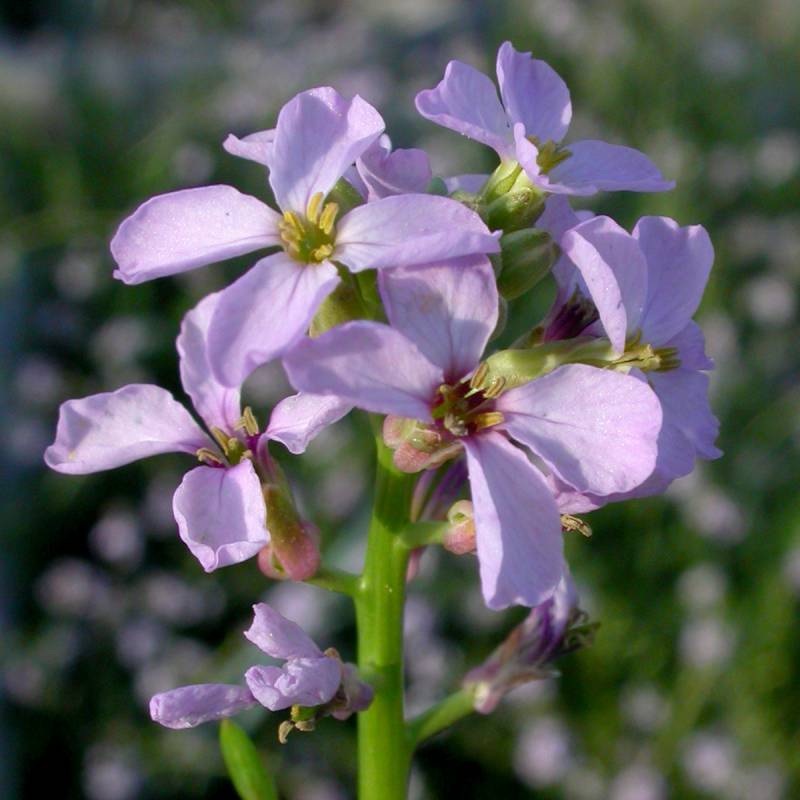
Flowers in racemes 4-15 cm long; pedicles stout, 3-7 mm long, ascending; sepals 4, 3-4 mm long, with a few soft hairs at the tip, soon deciduous; petals 4, nearly white to lilac, long-clawed, 8-10 mm long; stamens 6; style none.
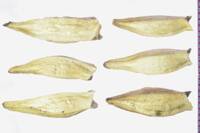
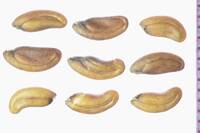
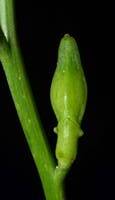
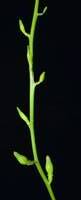
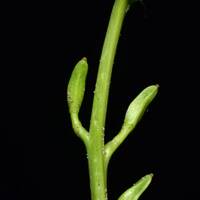
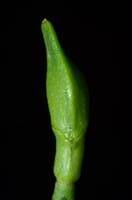
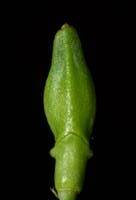
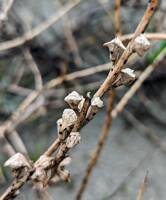
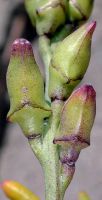
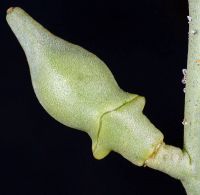
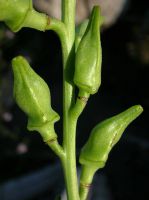
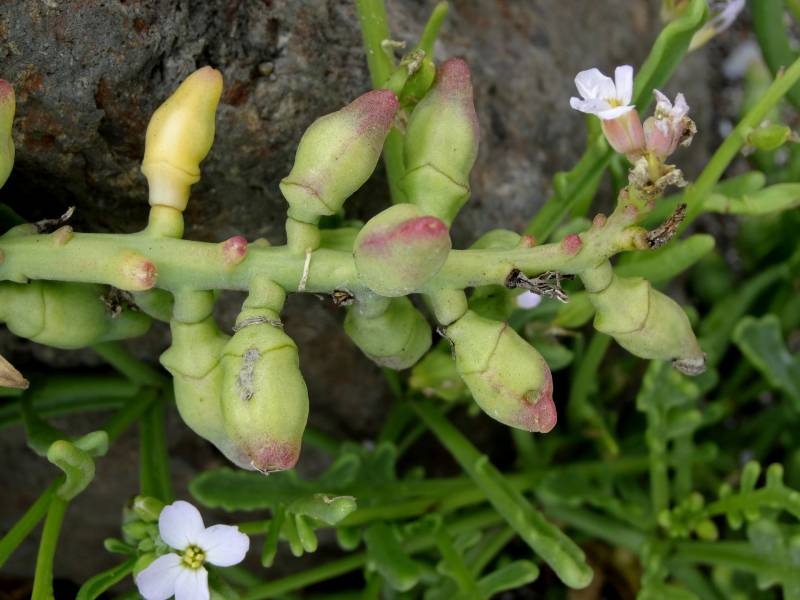
Siliques fleshy, 12-18 mm long, 2-jointed, the lower segment persistent, flared into 2 prominent, horn-like lobes at the tip, the upper segment ovoid and deciduous, narrowed to a truncate beak, each segment 1-seeded or the lower segment seedless.
Publication: Fl. Carniol. ed. 2. 2: 35. 1772. 1772.
-
ssp. maritima – European sea-rocket, sea-rocket
 Occurring west of the Cascades crest in coastal counties in Washington; British Columbia to California along the coast, also along the Chesapeake Bay on the Atlantic Coast.
PNW Herbaria: Specimen records of Cakile maritima in the Consortium of Pacific Northwest Herbaria database
WA Flora Checklist: Cakile maritima checklist entry
OregonFlora: Cakile maritima information
E-Flora BC: Cakile maritima atlas page
CalPhotos: Cakile maritima photos